

Insurancy

Individual Disability Insurance

Find The Best Policy Find The Best Policy Start Disability policies are there to cover you in the event that you can’t work, either because of illness or injury.

Individual Disability Insurance
Brian Greenberg

Written by Brian Greenberg

CEO / Founder & Licensed Insurance Agent

Grant Desselle

Reviewed by Grant Desselle

Licensed Insurance Agent

Last updated: August 2022 | 8 min read

Individual Disability Insurance at a glance

  • Disability insurance covers up to 60% of your income when unable to work.
  • Less than half of Americans can cover three months without income.
  • Premiums typically cost 1 to 3 percent of your annual gross income.
  • Short-term disability covers 60-70% of income for a few months to a year.
  • Long-term disability covers you from two years up to retirement age.
  • Own-occupation policies pay if you can't perform your specific job.
  • Waiting periods for benefits can range from 30 days to 365 days.

What Does Disability Insurance Cover?

Disability Insurance Covers Up To 60% Of Your Income.

It is coverage that allows you to continue making a portion of your income when you are otherwise unable to work and continue providing for your family.

According to the Council for Disability Awareness, more than one in four millennials will spend at least a year off of work for a disabling condition before they reach retirement age.

Do you need disability coverage?

  • Do you have enough money squirreled away in a savings account to cover those months of lost income?
  • Do you have a solution for how you can provide for your family during this financially lean period?

Statistically, according to the Council for Disability Awareness, less than half of Americans have enough money saved to cover three months without a regular income source. So, if you answered “No” to any of the questions above, then, disability insurance should be a high priority. This way both you and your family’s well being is always at the top of your mind.

How Much Does Individual Disability Insurance Cost

As a rule of thumb, disability insurance premiums cost 1 to 3 percent of your annual gross income.

To put this into perspective, a person making around $50,000 a year in gross income will pay approximately $500 to $1,500 a year for Disability Insurance.

Even beyond the waiting and elimination periods, like with any insurance, the cost and premiums of your policy can also vary pretty widely based on a variety of pre-existing conditions:

  • Lifestyle habits: Habits such as smoking, alcohol, and drug use can all affect the premiums and the level of coverage you’ll receive.
  • Occupation: Higher risk jobs will lead to you paying much higher premiums.
  • Existing health: If you have pre-existing health conditions, you’ll also wind up paying for it.
  • Gender: Women are more likely to file disability claims than men. This means they tend to pay more for coverage.
  • Income: With the income you are bringing in, the more you will ultimately pay for coverage.

Finding a disability policy may seem daunting at first, but as you find the policy type that fits your needs, the pre-existing factors you need to consider and understand the reasons why you need it, you’ll be all set.

What does Short-Term Disability cover?

Short-term disability covers you when you are out of work for a few months to a year and many employers offer this kind of coverage to their employees through their group insurance plans.
These plans generally cover 60-70% of your monthly income for the time that you’re out.

Short-Term Disability covers:

  • Pregnancies (and resulting complications)
  • Digestives disorders
  • Injuries/broken bones
  • Mental health issues

Because they aren’t meant to cover you for an extended period of time, these policies pay out a percentage of your monthly income so you aren’t negatively impacted by your inability to work. This way you’re protected whether you injure yourself doing a home improvement project or if you need to take time off for your pregnancy.

What Does Long Term Disability Insurance Cover?

Long-term disability covers you when you’re out of work from anywhere between two years up to retirement age. These plans are rarely offered by employers and needs to be purchased independently like life insurance. In the event an employer does provide this, you often still have to find your own supplemental coverage. These policies can cover up to 60% of your gross monthly income, although you are better served to invest somewhere between 1-3% of your yearly salary.

The two main types of long-term disability insurance are own occupation and any occupation:

  • An own-occupation policy goes into effect when an insured can’t perform the job they were specifically trained to do.
  • An any-occupation policy applies to situations where an insured is unable to work at any job, taking their level of education, experience, and age into consideration.

Less than half of Americans have the discretionary income set aside to cover three months of expense if they’re without an income source, let alone possibly being out of work for years due to a chronic or life-altering condition.

The leading causes of long-term disability are:

  • Muscle/Joint Issues (Arthritis)
  • Mental Health Issues
  • Cardiovascular Issues
  • Injuries
  • Cancer

These are situations that can threaten both your own and your family’s livelihood. The causes are more common than some might have you believe, so it’s key that you educate yourself about the ins and outs of long-term disability, so you can protect both you and your family to the fullest extent.

Frequently Asked Questions

Does my employer offer disability insurance?

In many cases, employers offer short-term policies. This is especially true of California, Hawaii, New Jersey, New York, Rhode Island, and Puerto Rico, where there are state-mandated disability insurance requirements for employers. Employer-sponsored plans also generally mean that employers either part or all of the premiums. Even if your employer doesn’t specifically offer a sponsored plan, you still have options to explore in the workplace.

In other instances, short-term disability coverage may be offered as a voluntary add-on to existing insurance plans. The coverage is still the same, but you will be on the hook for paying the premiums. If you’re part of a union, guild, or work-related association, it’s possible that they will offer you a voluntary disability plan as well.

Do I need to be approved for disability insurance

Disabilty insurance through a group or employer is automatic approval.

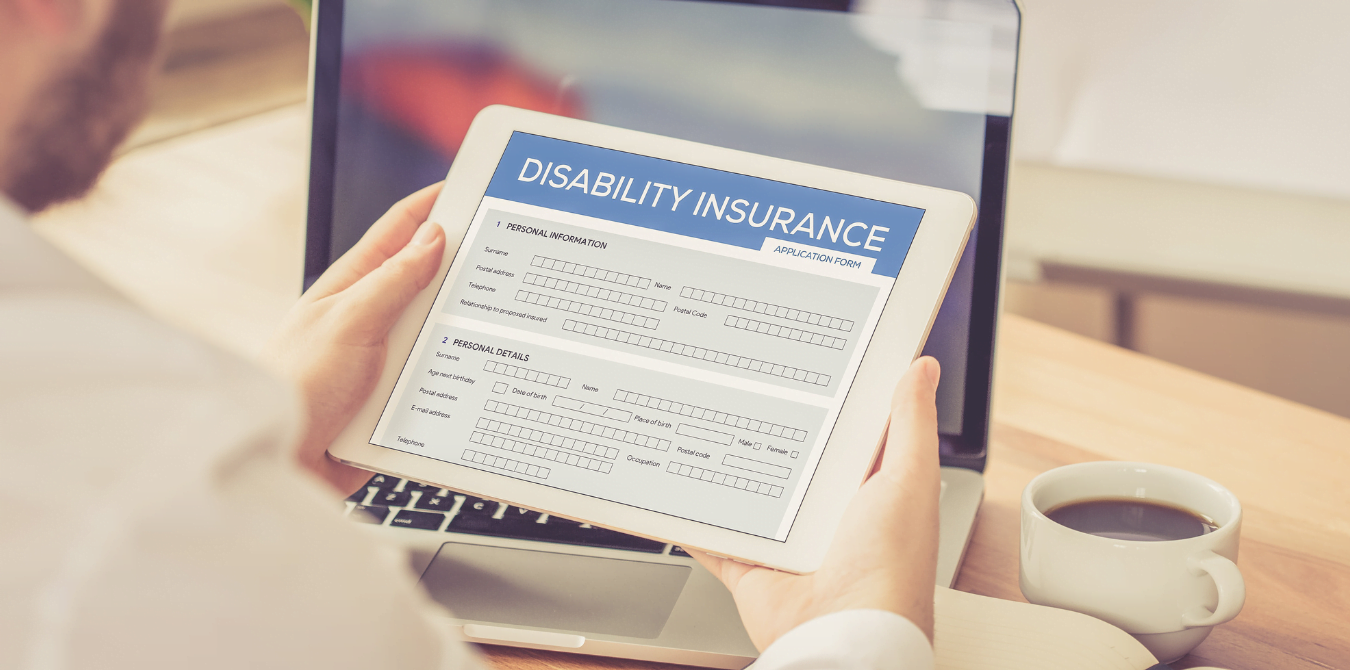
Individual disability insurance has an underwriting process where you talk about your lifestyle habits, health conditions, and other important facts. This process may also require you to get a paramedical exam to get a baseline of your medical information as well.

Why does my income matter?

When looking at how much coverage you need from a disability policy you need to have a good sense of your average income. For short-term, the usual payout range is between 60%-70%, while long-term policies pay out between 40%-60%.

It’s also worth noting that having a higher paying jobs means that you will wind up paying a lot more for your coverage. The higher the payout, the higher the premium you stand to pay.

What is the waiting/elimination period?

Depending on what kind of disability you’re ultimately dealing with, you’ll have to gauge how long you’ll need to stay on disability until you can get back to work.

At the same time, you’ll have to consider waiting periods for when your benefits actually kick in. WIth short-term policies, there is usually a maximum 14 day waiting period. For long-term policies, you have an elimination period or a period where you have to be disabled before your benefits kick in. These elimination periods can range between 30 days to 365 days, though the industry standard is usually around 90 days.

What does “own occupation” and “any occupation” mean?

An own-occupation policy goes into effect when an insured can’t perform the job they were specifically trained to do.

For example, a surgeon who loses their hand in a freak gardening accident may not be able to do their job as a result. In this case, they would be able to collect benefits, even if they find another job in a different field they are able to do instead.

An any-occupation policy applies to situations where an insured is unable to work at any job, taking their level of education, experience, and age into consideration. In many cases, a claim for an any-occupation policy may be denied if it is proven that you can work part-time or work with workplace accommodations.

In the case of the doctor from the previous example, they would not receive benefits if they were able to teach or able to perform work even outside their field of expertise.

How much does short-term disability pay?

Once you’ve been approved for a policy, you’ll want to know when you can expect your policy to pay out and how much you can expect to be bringing in.

The maximum payout for most short-term policies is around 80%, but you’re more likely going to receive somewhere between 60% and 70%. Though, there are also often caps on the maximum amount you can receive in benefits, though that is often based on how long you’re receiving benefits too. According to the Insurance Information Institute, the maximum period you can receive short-term disability benefits for is two years

For short-term policies, you will also start receiving benefits 14 days, at the very latest, after you file your claim, though you’ll likely start receiving them earlier. Though it’s possible you may have to use up all of your sick days before you can start collecting short-term disability as well. You will continue receiving these benefits until you either reach the end of your benefits period or you’re able to go back to work.

How much does short-term disability pay?

Once you’ve been approved for a policy, you’ll want to know when you can expect your policy to pay out and how much you can expect to be bringing in.

The maximum payout for most short-term policies is around 80%, but you’re more likely going to receive somewhere between 60% and 70%. Though, there are also often caps on the maximum amount you can receive in benefits, though that is often based on how long you’re receiving benefits too. According to the Insurance Information Institute, the maximum period you can receive short-term disability benefits for is two years

For short-term policies, you will also start receiving benefits 14 days, at the very latest, after you file your claim, though you’ll likely start receiving them earlier. Though it’s possible you may have to use up all of your sick days before you can start collecting short-term disability as well. You will continue receiving these benefits until you either reach the end of your benefits period or you’re able to go back to work.

How long until long term disability begins to pay?

The way you actually get benefits, once your policy is approved, involves filing a claim with your insurer. You won’t start receiving benefits until they approve your claim.

Before you can start getting benefits from your long-term disability plan, you’ll have to wait for a set period of time where you must be disabled. This is known as the “elimination period.” These can be as short as 30 days or as long as 365 days long. The longer your elimination period, the less your premiums will be. The standard elimination period is usually 90 days.

You’ll receive the benefits up until the “benefit period” ends. This goes up until the period specified in your contract, which can last as short as two years or up until the insured reaches retirement age.

The benefits that you receive from a long-term policy usually even out to about 60% of the monthly income you would otherwise be receiving. You then receive this benefit up until a time where you can return to work.

What qualifies as a disability?

Your ability to receive benefits from your long-term disability policy is also dependent on how your insurer defines disability.

As noted, in the own occupation versus any occupation section, these distinctions are key to any policy, but the definition of disability should be clear to both parties involved before signing on the dotted line.

For example, if you’re still able to work in some way, many insurers may only consider you “partially disabled.” Depending on how much income you’re bringing in from a potential new job, the amount of benefit paid out will adjust accordingly. If you’re making less 20% of your pre-disability income, you’ll likely get full benefits, but if you’re making between 20% and 80%, then you’ll get your benefits on a proportionally sliding scale. If you’re making more 80% or higher than your pre-disability income, then they likely won’t even consider you disabled.

Because the amount of benefit paid out and stipulations for payout differ between insurers, these are the aspects you need to discuss with your agent before you fully commit to any long-term disability policy. That way you’ll know how it can help in every situation.

Individual Disability Insurance Request Form

Frequently asked questions

Does my employer offer disability insurance?+

Many employers offer short-term policies, especially in states with mandated requirements. Employer-sponsored plans often mean that employers cover part or all of the premiums.

Do I need to be approved for disability insurance?+

Disability insurance through a group or employer is usually automatically approved. Individual disability insurance requires an underwriting process that may include a paramedical exam.

Why does my income matter?+

Your average income helps determine the coverage you need. Short-term policies typically pay out 60-70%, while long-term policies pay out 40-60%.

What is the waiting/elimination period?+

The waiting period is how long you must wait before benefits kick in. Short-term policies usually have a maximum 14-day waiting period, while long-term policies can range from 30 to 365 days.

What does own occupation and any occupation mean?+

An own-occupation policy pays if you can't perform your specific job. An any-occupation policy applies if you cannot work at any job, considering your education and experience.

How much does short-term disability pay?+

Most short-term policies pay around 60-70% of your income, with a maximum payout of about 80%. Benefits typically start 14 days after filing a claim.

How long until long-term disability begins to pay?+

You must wait for an elimination period before receiving benefits from a long-term policy. This period can range from 30 days to 365 days, with 90 days being standard.

What qualifies as a disability?+

Disability definitions vary by insurer. If you can work in some capacity, you may be considered partially disabled, affecting your benefit amount.

About the authors

Brian Greenberg

Written by

Brian GreenbergCEO / Founder & Licensed Insurance Agent

Brian is the founder and CEO of Insurancy and carries Life, Health, and Property & Casualty licenses in all 50 U.S. states. Since 2013, Brian has been a member of Million Dollar Round Table, a designation for the top 1% of financial advisors worldwide. Brian has been featured in Yahoo! Finance, Money.com, Entrepreneur.com, Life Happens, Forbes, MSN, and Good Financial Cents. Brian’s goal is to show customers the best products, the quickest answers to their questions, and provide expert advice.

Grant Desselle

Reviewed by

Grant DesselleLicensed Insurance Agent

Grant's past experience includes work as a licensed sales agent for Hagerty Insurance. He has reviewed thousands of existing auto policies across the nation and issued hundreds of new ones on everything ranging from classic cars undergoing restoration to modern exotics and motorcycles.

Get the most accurate rates in 2 minutes or less

Making a financial decision doesn’t have to be stressful. See what you qualify for by answering some health questions.

Get a Free Quote